



Most Popular Products
|

 Send Inquiry
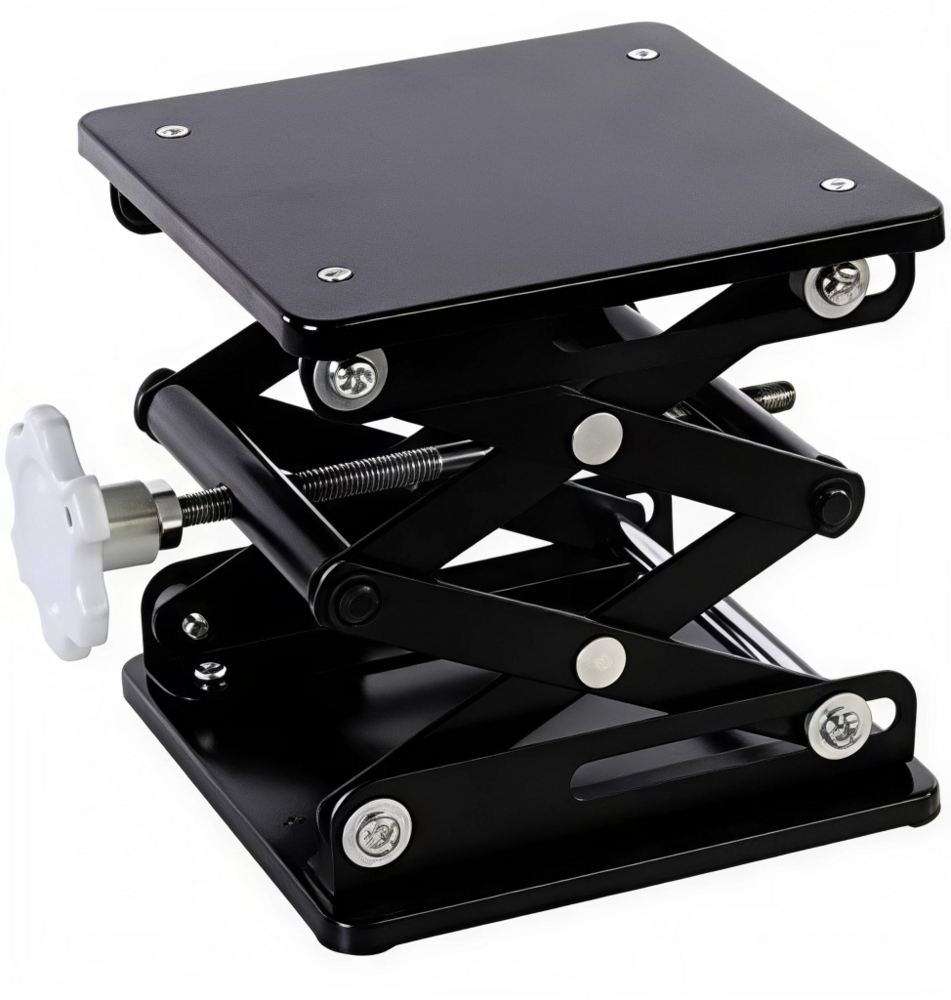
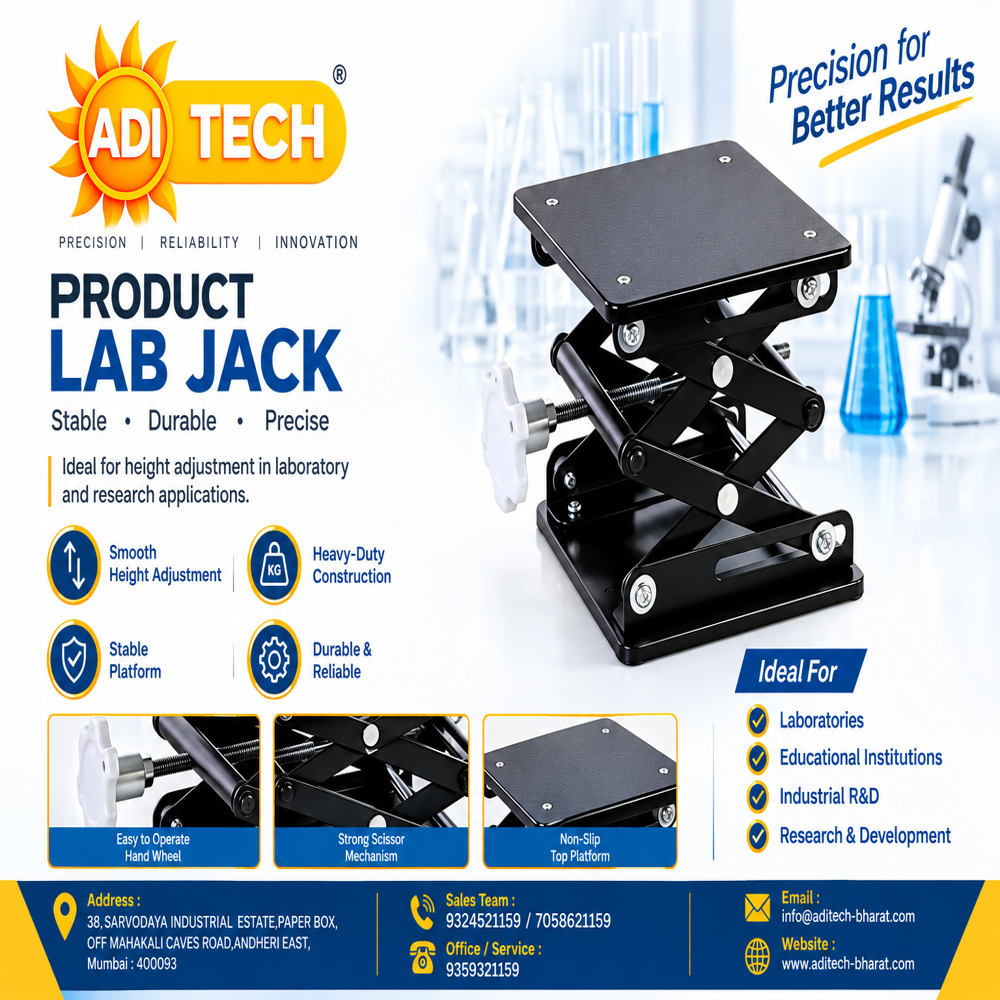
Lab Jack
Price 7000.0 INR/ Set
MOQ : 1 Set
Lab Jack Specification
- Feature
- Good Quality
- Warranty
- 1 Year
- Power Source
- Manual
- Material
- MS
- Color
- Black
- Type
- Lab Jack
- Usage
- Industrial
Lab Jack Trade Information
- Minimum Order Quantity
- 1 Set
- Delivery Time
- 7 Days
About Lab Jack
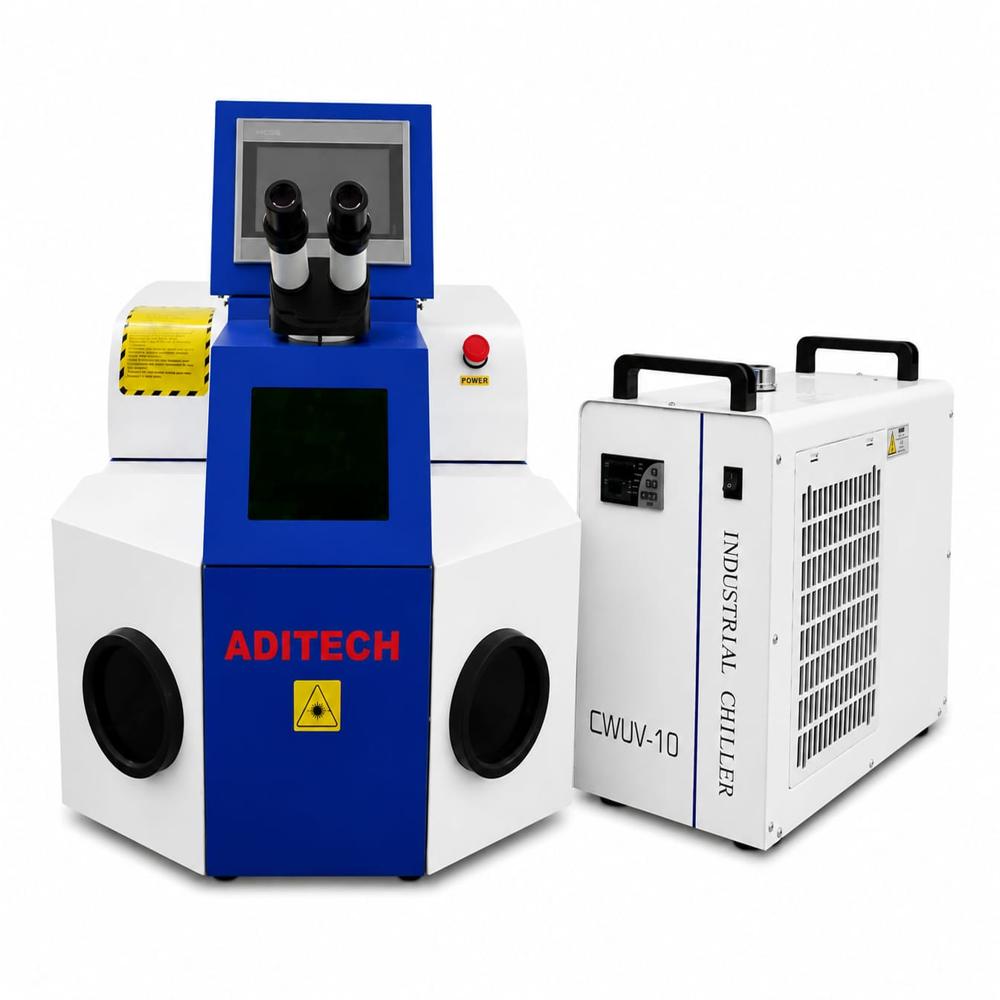
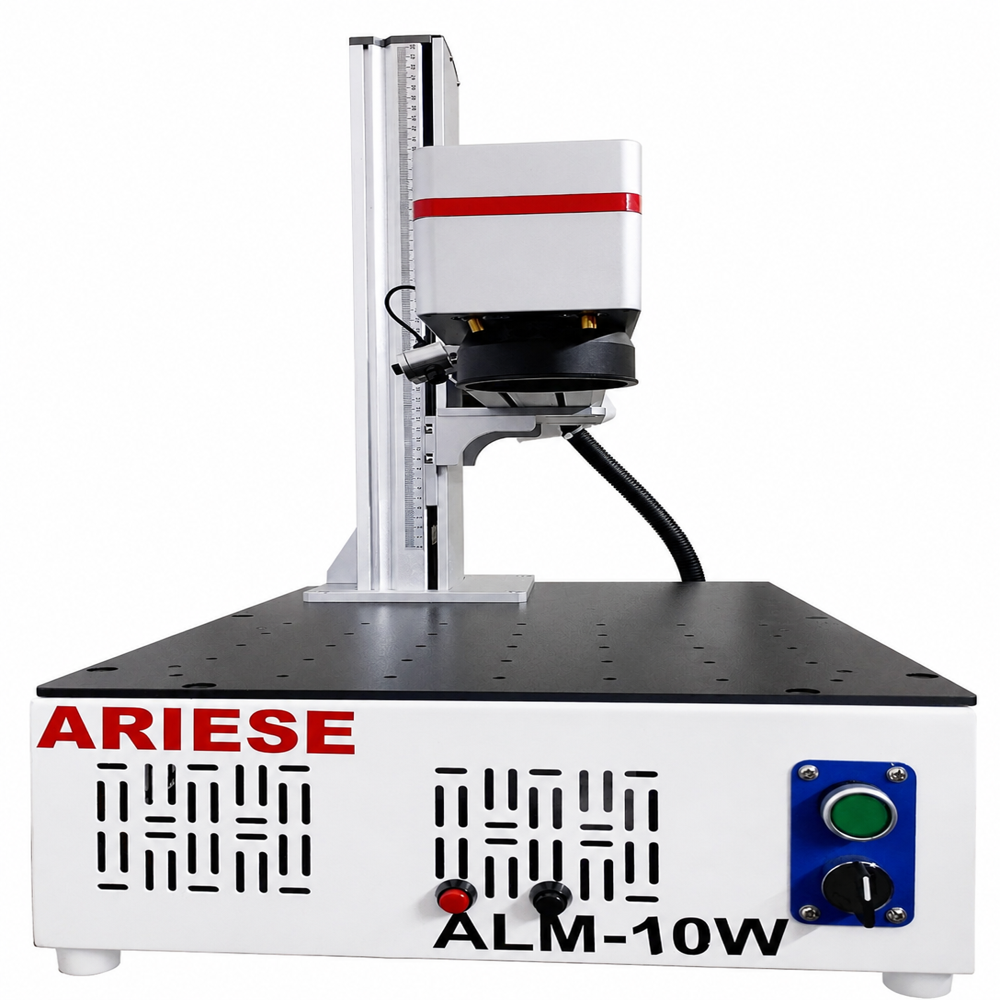
When used in Laser Welding and XRF (X-ray Fluorescence) Spectroscopy, a laboratory scissor jack serves as a high-precision positioning tool rather than just a simple utility riser. In these applications, millimeter-level height accuracy is vital to ensure structural alignment, safety, and proper analysis. [1]
1. In Laser Welding
In material fabrication and micromachining, a lab jack serves as an adjustable Z-axis stage.
- Focal Point Alignment: Laser welding requires the beam to focus exactly on the joint gap of the metal parts. A lab jack moves the workpiece up or down to align perfectly with the lasers focal plane.
- Consistency Across Varying Thicknesses: When transitioning between materials of different gauges or dimensions, the lab jack allows operators to change sample heights smoothly without resetting the entire laser optical head assembly. [2]
- Stability Against Vibration: Heavy-duty steel or aluminum jacks minimize mechanical wobbling, ensuring the laser path creates uniform, defect-free weld seams. [1, 3]
2. In XRF Spectroscopy
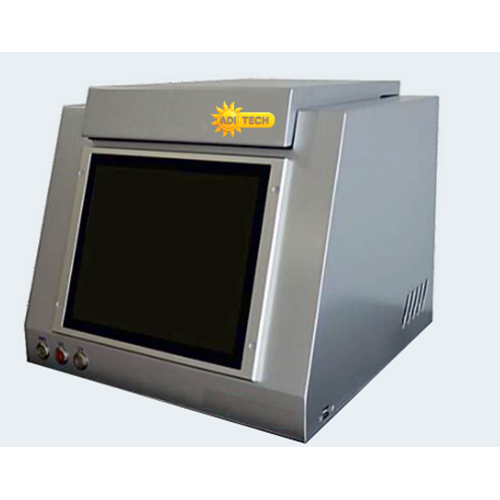
XRF analyzers determine the elemental composition of materials by firing primary X-rays at a target and reading the secondary fluorescence. [4, 5]
- Geometric Precision: The intensity of the detected X-ray signal drops significantly if the distance between the sample surface and the analyzer window changes. A lab jack places the sample at the exact distance required by the spectrometer calibration. [4]
- Non-Destructive Target Selection: For oddly shaped components or multi-point weld analysis, the lab jack shifts specific target areas precisely into the path of the X-ray beam without causing damage to delicate sensors. [5, 6]
- Safety Positioning: Elevating samples cleanly onto a stable deck prevents tipping, protecting both the user and the delicate beryllium or silicon drift detectors (SDD) within benchtop XRF systems from accidental contact.
Comparison of Key Requirements
| Feature | For Laser Welding | For XRF Spectroscopy |
|---|---|---|
| Material Build | Rigid heavy-duty steel to handle workpiece weight. | Anodized aluminum or stainless steel to prevent scattering interference. |
| Adjustment Need | Macro and micro adjustments to match laser focus. | Fixed micro-positioning to maintain signal intensity. |
| Key Priority | Anti-vibration and load capacity. | High flatness and parallelism. |
Tell us about your requirement

Price:
Quantity
Select Unit
- 50
- 100
- 200
- 250
- 500
- 1000+
Additional detail
Mobile number
Email


Quick Inquiry



Contact Details
ADITECH
GST : 27ASFPV9046A1ZK
GST : 27ASFPV9046A1ZK
38, Sarvodaya Industrial Estate, paper Box, Mahakali Caves Road, Andheri East,Mumbai - 400093, Maharashtra, India
Phone :7058621159

 Send Inquiry
 |
